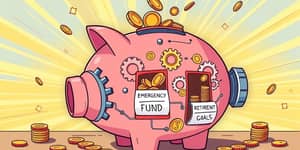
In a world where the top 1% pocket 20.3% of global income and the richest 0.001% hold three times the wealth of the bottom half of humanity, achieving financial security while enjoying personal well-being can seem like a distant dream. Yet, by understanding the forces that drive inequality and embracing strategic choices around work, location, and policy, individuals can forge paths toward both prosperity and fulfillment.
Understanding Income Inequality
The latest World Inequality Report reveals that extreme wealth concentration and stagnant wages are not anomalies but defining features of our economy. In the United States, the top 1% owns 31.7% of household wealth—matching the combined holdings of the bottom 90%. Meanwhile, billionaire fortunes soared three times faster than the prior five-year average in 2025, deepening gaps that Thomas Piketty warns must be addressed or the social fabric will fray.
Regional and gender divides magnify these challenges. Education spending ranges from €200 per child in Sub-Saharan Africa to over €9,000 in North America. Women earn just 61% of men’s hourly wages—and when unpaid labor is factored in, that figure drops to 32%. As Rowaida Moshrif reminds us, “Inequality is not inevitable... a call to act: to rebuild solidarity, renew trust in democracy, and share prosperity more fairly.”
The Work-Life Balance Imperative
Work-life balance (WLB) is more than a buzzword—it directly shapes productivity, retention, and earning potential. In the OECD, 10% of employees work over 50 paid hours weekly; in the U.S., the average full-time worker clocks 1,790 hours annually versus the OECD average of 1,716. Burnout haunts 77% of employees, while 83% now prioritize WLB over salary.
Generational shifts intensify the demand for flexibility. Nearly half of Gen Zers seek remote options, yet only a third view WLB as a retention factor, signaling untapped opportunities for employers and individuals alike. As companies recalibrate their cultures, those who leverage flexible arrangements often report maximizing earnings while preserving autonomy and higher long-term satisfaction.
Harnessing Flexible Work and Side Hustles
Remote and hybrid models have emerged as powerful levers for both income and time management. Surveys show that 41% of workers achieve better balance at home, and 67% credit flexibility for improved well-being. Hybrid setups yield two times less burnout and 1.7 times better control over hours compared to full-office environments.
- Negotiate hybrid or remote schedules that align with peak productivity and family needs.
- Build a side hustle or freelance project—28% of professionals polywork to boost earnings.
- Automate savings and investments to turn variable income into steady wealth growth.
- Set clear boundaries around work hours and technology use to prevent burnout.
- Invest in upskilling and networking to command higher rates and diversify income streams.
By leveraging remote work for financial stability, many have unlocked new opportunities—trading commute time for courses, collaborations, and creative ventures.
Choosing the Right Location
Your city of residence can be a silent partner in your financial journey. From labor participation to commute times, local conditions shape your capacity to earn and enjoy life. The following table highlights top U.S. cities for balancing work hours with personal freedom:
Moving to a locale with shorter hours and commutes can reclaim hours each week for family, health, or side ventures. Beyond U.S. borders, countries like Poland and France score high on inequality rankings, signaling more equitable societies and better support systems.
Leveraging Policy and Community Tools
Individual efforts gain traction when buttressed by supportive policies. Progressive taxation, public investment, and targeted social programs can level the playing field. As Ricardo Gómez-Carrera observes, “Inequality is silent until it becomes scandalous. This report gives voice to inequality — and to the billions of people whose opportunities are frustrated...”
- Advocate for progressive taxation and public social investment that funds education, healthcare, and infrastructure.
- Support local initiatives like workforce training panels and inequality task forces.
- Engage in community networks to share resources, mentorship, and job leads.
By investing in skills and professional networks, individuals can amplify their voices and influence policy decisions that shape economic opportunity.
Actionable Steps for Financial Empowerment
While systemic change is essential, everyday actions can bridge gaps today. Start by assessing your income sources and carving out time to track expenses. Negotiate for flexible work arrangements that reward outcomes over hours. Build multiple income streams—consulting, digital products, or part-time gigs—to mitigate wage stagnation.
Automate a portion of earnings into emergency funds and diversified investments. Use budgeting apps and financial planners to visualize progress. Target skills in growth sectors—technology, renewable energy, healthcare—where wages outpace inflation. And never underestimate the power of community: peer accountability groups can sustain motivation and open doors to collaborations.
Ultimately, bridging the income gap with flexibility is both a personal journey and a collective endeavor. By combining strategic location choices, flexible work, advocacy for equitable policies, and disciplined financial habits, you can secure not only greater wealth but also the freedom to live a balanced, purpose-driven life.
As we navigate an era defined by inequality, each step toward financial resilience and work-life harmony is a step toward a fairer, more inclusive future. Take action today, and inspire change for tomorrow.
References
- https://wid.world/news-article/world-inequality-report-2026-inequality-persist-at-a-very-extreme-level/
- https://moneyzine.com/careers/work-life-balance-statistics/
- https://www.cbsnews.com/news/us-wealth-gap-widest-in-three-decades-federal-reserve/
- https://www.elevateleadership.com/blog/the-best-cities-for-work-life-balance-in-2026
- https://wir2026.wid.world
- https://www.zippia.com/advice/work-life-balance-statistics/
- https://www.worldeconomics.com/Rankings/Economies-By-Inequality.aspx
- https://pumble.com/learn/collaboration/remote-work-statistics/
- https://inequality.org/facts/global-inequality/
- https://archieapp.co/blog/workplace-statistics/
- https://ourworldindata.org/grapher/economic-inequality-gini-index
- https://boterview.com/a/work-life-balance-statistics
- https://www.oxfam.org.uk/get-involved/campaign-with-oxfam/fight-inequality/oxfams-global-inequality-report/
- https://www.roberthalf.com/us/en/insights/work-life-balance