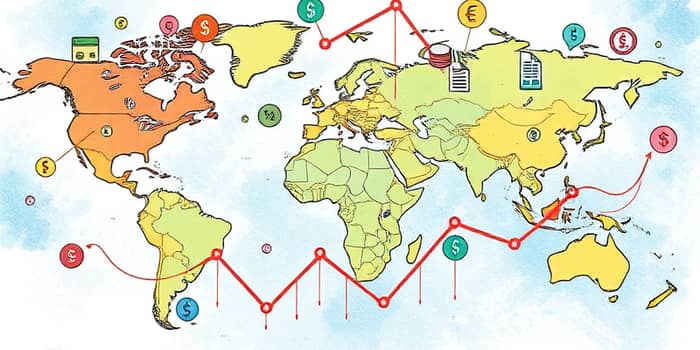
In today’s interconnected economy, exchange rate risk amplifies credit exposure for businesses and investors. When currencies fluctuate unpredictably, cross-border payments and financing arrangements become far more complex.
Understanding the fundamentals and adopting robust strategies can protect profit margins, preserve creditworthiness, and sustain growth across continents.
Definitions and Fundamentals
At the heart of international trade and finance lie three core concepts:
- Cross-border payments: Transactions between parties in different countries, involving currency conversion, multiple correspondent banks, and diverse regulatory frameworks.
- Currency risk: The exposure to unpredictable changes in currency values, which can erode the domestic value of foreign receipts or inflate local debt obligations.
- Credit in cross-border context: Financing arrangements—such as trade credits, loans, and bonds—where repayment terms span multiple currencies, and shifts in exchange rates magnify repayment costs.
Global cross-border payments are projected to grow five percent annually through 2027, driven by expanding supply chains, digital services, and emerging market trade.
As volumes rise, so do the stakes for managing currency and credit risk.
Types of Currency Risk in Cross-Border Transactions
Currency risk manifests in three primary forms, each with distinct implications for credit exposure and financial reporting.
When multiple currencies intertwine—such as euro revenues funding USD payables—multiple currencies heighten exposure and complicate credit risk assessments.
Mechanics of Cross-Border Payments and Credit Ties
Cross-border transactions flow through several stages without any physical cash crossing borders. Each step carries timing, cost, and credit implications.
- Sender initiation: A payment instruction via SWIFT or another messaging system begins the process.
- Correspondent banking: Funds route through up to five intermediary banks, each applying fees and potential delays.
- Settlement and credit: Recipient bank credits the beneficiary; FX markups and conversion times determine the final amount.
Lengthy settlement cycles can tie up credit facilities, disrupt cash flow forecasts, and increase reliance on short-term borrowing. In trade finance, approval processes and tax treaty considerations further link currency timing to credit availability.
Costs and Quantitative Impacts
Traditional cross-border fees range from 3–7% of transaction value, encompassing FX spreads, intermediary deductions, and receiving bank charges. Small shifts in exchange rates—often less than 1%—can still alter profit margins significantly on high-value trades.
- FX spreads: Markups over interbank rates compensate providers for volatility and operational risk.
- Intermediary fees: Handling and service charges levied by correspondent banks.
- Receiving charges: Local fees deducted from the final payout.
For small businesses, these combined costs may deter entry into lucrative markets and strain working capital, while multinationals face complex internal allocation challenges.
Mitigation Strategies for Currency Risk and Credit Protection
Effective risk management integrates hedging tools with credit safeguards to lock in rates and stabilize cash flows.
- Natural Hedging: Match inflows and outflows by using foreign revenues to cover local expenses, reducing net FX exposure.
- Forward Contracts: Lock rates for future settlements, ensuring predictable import costs and export receipts.
- Currency Options: Obtain the right, without obligation, to exchange at a predetermined rate, balancing flexibility with premium costs.
- Currency Swaps: Exchange principal and interest payments over time, transforming debt exposure into a more manageable currency profile.
Complementary approaches include multi-currency accounts to hold local balances and centralized risk teams partnering with FX providers for real-time market insights and tailored credit solutions.
Challenges and Broader Implications
Operational risks such as fraud, system outages, and opaque fee structures add layers of uncertainty to cross-border flows. Divergent AML/KYC regulations and sanctions screening can delay transactions and jeopardize trade relationships.
From an investment perspective, unmanaged currency risk erodes returns and inflates volatility. Companies that neglect hedging may face downgraded credit ratings, leading to higher funding costs and restricted access to capital markets.
In the broader economic landscape, currency crises and sudden devaluations can trigger cross-border debt stress, as seen in past emerging market crises. Proactive currency and credit risk management is not merely a defensive tactic but a strategic enabler for sustainable international growth.
Conclusion and Call to Action
As global commerce deepens, multinational corporations and small businesses alike must embrace integrated frameworks that address both currency fluctuations and credit exposures. By deploying a mix of natural hedges, financial derivatives, and centralized oversight, organizations can secure margins, strengthen balance sheets, and navigate the complexities of cross-border transactions with confidence.
Adopting comprehensive risk management frameworks transforms currency volatility from a threat into an opportunity—enabling resilient growth and enduring financial stability across every market frontier.
References
- https://ramp.com/blog/cross-border-payments
- https://www.stonex.com/en/financial-glossary/currency-risk/
- https://www.financialprofessionals.org/glossary/cross-border-payments
- https://wise.com/us/blog/cross-border-financing
- https://www.bankofengland.co.uk/payment-and-settlement/cross-border-payments
- https://www.thunes.com/insights/learn/what-are-cross-border-payments/