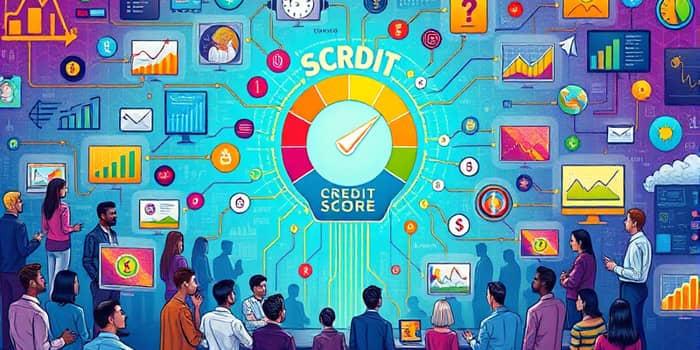
The landscape of credit assessment is undergoing a seismic shift, powered by unprecedented data volumes and advanced analytics. Financial institutions, fintech innovators, and risk managers are harnessing information flows from traditional records to unconventional sources—social media, mobile footprints, and enterprise behaviors—to refine lending decisions. By embracing big data processing and machine learning algorithms, organizations can unlock predictive insights, streamline operations, and foster financial inclusion for underbanked populations.
Introduction to Data Analytics in Credit Assessment
Credit assessment has historically relied on credit bureau scores, income statements, and manual underwriting processes. These methods, while foundational, often yield delays, bias against new borrowers, and inefficiencies. Today, data-driven analytics offers a transformative approach. By integrating diverse data sources—from payment patterns and transaction histories to social signals—lenders can more accurately gauge creditworthiness and reduce default risks.
Each day, the world generates approximately 2.5 quintillion bytes of data. Yet, traditional credit models tap into only a fraction of this resource. Embracing advanced analytics and real-time decision making empowers lenders to sift through massive datasets, identify hidden patterns, and make decisions in minutes rather than days.
Traditional vs. Data-Driven Credit Scoring
Comparing legacy methodologies with modern analytics highlights the paradigm shift in credit assessment. The following table crystallizes key differences:
Core Analytics Techniques and Tools
The backbone of data-driven credit assessment lies in a suite of advanced methodologies and platforms. Financial institutions deploy a combination of statistical models, machine learning, and graph-based systems to derive actionable insights.
- Credit Scoring Models: Statistical algorithms apply weightings to historical repayment data, customer demographics, and behavioral metrics. Periodic revalidation ensures models maintain accuracy.
- Predictive Analytics: Machine learning techniques—such as random forests and gradient boosting—forecast future behavior by identifying correlations in large datasets, including unconventional indicators like social engagement.
- Big Data Analytics: Platforms capable of processing high-velocity, high-volume streams of structured and unstructured data group customers by patterns, solving data sparsity challenges for underbanked segments.
- AI and Knowledge Graphs: These map complex relationships among data points—employment history, transaction networks, and public records—to create alternative data sources for robust credit profiles.
- Real-Time Monitoring: Post-issuance analytics track account activity, financial health changes, and social behavior to recalibrate risk assessments throughout the loan lifecycle.
Benefits for Lenders and Borrowers
Adopting a data-driven credit framework yields compelling advantages across stakeholders:
- Enhanced Risk Mitigation: More precise identification of low-risk borrowers drives down default rates; dynamic monitoring catches early warning signals.
- Operational Efficiency: Automation reduces underwriting time from days to minutes, cutting administrative overhead and accelerating revenue cycles.
- Superior Customer Experience: Quick approvals and personalized product recommendations foster loyalty and satisfaction.
- Financial Inclusion: Evaluating non-traditional data opens credit access to applicants with limited or no bureau history, supporting underserved communities.
Studies demonstrate that machine learning credit scores can pinpoint approximately 10.36% of enterprises with poor creditworthiness more accurately than legacy methods. Moreover, lenders experience lower costs per loan and standardized, transparent decisions.
Real-World Applications and Examples
Leading banks and fintech firms are already reaping the rewards of analytics-driven credit processes. For instance, digital lenders combine spending patterns with employment trajectories to craft holistic borrower profiles, enabling instant credit decisions for consumer loans.
Microfinance institutions leverage big data tools to assess small business creditworthiness. By integrating transaction histories from mobile wallets, social reputation indicators, and public records, these organizations extend financing to entrepreneurs previously deemed too risky.
In post-issuance monitoring, major lenders deploy continuous analytics to track borrowers’ financial health. Alerts triggered by significant changes—such as sudden income drops or escalating debt ratios—allow proactive outreach and risk mitigation strategies.
Challenges and Solutions
While the promise of data-driven credit assessment is immense, practical hurdles remain:
Data Quality and Access: Despite abundant information, integrating disparate sources and ensuring data integrity can be daunting. Financial institutions must invest in robust data pipelines, cleansing mechanisms, and governance frameworks.
Regulatory Compliance: Regulatory frameworks governing data privacy and lending practices necessitate careful balancing of innovation with legal safeguards. Collaborating with compliance teams early in project design ensures ethical, lawful deployment.
Implementation Costs and Skills: Building or acquiring advanced analytics platforms demands capital and specialized talent. To mitigate these barriers, organizations often partner with analytics vendors or leverage open-source frameworks and cloud-based services.
Bias and Fairness: Models trained on historical data can perpetuate existing biases. Continuous monitoring, algorithmic audits, and diverse data inputs help safeguard fairness and transparency in credit decisions.
Future Trends and Innovations
The future of credit assessment will be shaped by deeper AI integration, richer data ecosystems, and evolving risk landscapes. Key trends include:
Expanding Alternative Data: Wearable device metrics, utility payment records, and geolocation trends may become mainstream inputs for micro-level risk profiling.
Real-Time Portfolio Management: Live dashboards powered by streaming analytics will allow lenders to adjust credit policies dynamically, responding to macroeconomic shifts or emerging market risks.
Explainable AI: As regulatory scrutiny intensifies, transparent algorithmic decision-making will be vital. Lenders will invest in interpretable models that articulate risk drivers in clear, human-understandable terms.
Collaborative Ecosystems: Cross-industry data partnerships—linking banking, telecommunications, and e-commerce—will forge comprehensive borrower views, fueling inclusive and sustainable lending solutions.
Ultimately, by marrying advanced analytics with responsible governance, the financial industry can unlock equitable credit access, bolster economic growth, and navigate an increasingly complex risk environment with confidence.
References
- https://global.hitachi-solutions.com/blog/big-data-banking/
- https://spyro-soft.com/blog/fintech/credit-risk-assessment-with-big-data-analytics
- https://www.mastechdigital.com/blogs/ai-in-credit-scoring
- https://nortridge.com/blog/how-data-analytics-transforms-loan-decisions/
- https://pmc.ncbi.nlm.nih.gov/articles/PMC10937588/
- https://www.mckinsey.com/capabilities/risk-and-resilience/our-insights/data-and-analytics-innovations-to-address-emerging-challenges-in-credit-portfolio-management
- https://www.valoremreply.com/resources/insights/blog/data-analytics-in-finance/
- https://www.experian.com/blogs/insights/what-is-credit-risk-analytics/