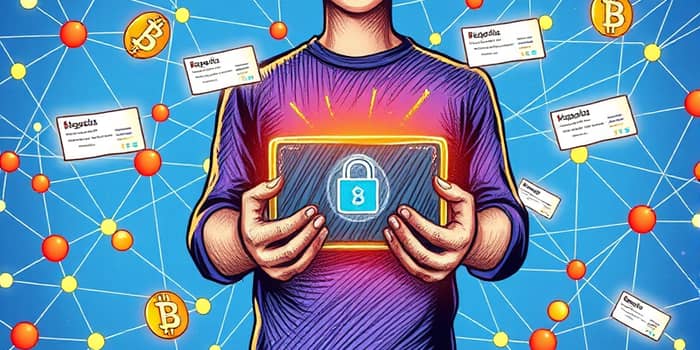
As we move deeper into the digital age, our identities and financial footprints become increasingly intertwined with online platforms and centralized databases. Every transaction, login, or credential check leaves a trace in systems we don’t control. This article explores a revolutionary approach—decentralized identity—that returns data ownership to you.
By embracing a self-sovereign identity model empowering users, individuals gain unprecedented autonomy over personal information and financial credentials. No longer must you rely on banks, governments, or large tech companies to verify who you are.
What Is Decentralized Identity?
Traditional identity systems store user data in siloed repositories controlled by a single authority. In contrast, a decentralized identity framework distributes identifiers and credentials across a network of nodes, putting you at the center of management.
This shift relies on three core elements:
- Blockchain or distributed ledger technology providing a distributed, immutable, public ledger for identity records.
- Decentralized Identifiers (DIDs)—unique, user-controlled identifiers generated without permission from any central authority.
- Verifiable Credentials (VCs)—cryptographically secure digital credentials stored in your digital wallet, ready for selective disclosure.
How Decentralized Identity Works
Instead of consolidating data in a central server, decentralized identity systems record only DIDs and cryptographic proofs on-chain, while storing actual credentials securely off-chain. When you share information, you provide a verifiable proof without revealing underlying details.
Key processes include:
- Generation of unique DIDs linked to public and private keys through public key cryptography ensures authentication across platforms.
- Recording DIDs and revocation status on a distributed, immutable, public ledger so any verifier can confirm authenticity.
- Secure storage of VCs in a digital wallet you control, enabling full control over personal data and minimizing exposure.
Advantages Over Centralized Systems
Decentralized identity offers transformative benefits in privacy, security, and interoperability:
- Enhanced Privacy: Users choose what information to share, preventing excessive data collection.
- Stronger Security: Blockchain’s immutability and cryptographic underpinnings thwart unauthorized modifications.
- Resilience: No single point of failure—your identity remains accessible even if one node goes offline.
Connecting to Your Financial Footprint
Every loan application, bank account creation, or credit check traditionally requires submitting sensitive documents to multiple institutions. Decentralized identity changes this dynamic by allowing you to present verifiable financial credentials directly from your wallet.
Instead of sending full bank statements, you can issue a zero-knowledge proof that confirms your account balance meets a threshold, without exposing detailed transaction history. This preventing unauthorized financial data tracking not only safeguards your privacy but also simplifies compliance processes.
Practical Steps to Embrace Your Decentralized Identity
Getting started may seem daunting, but the process breaks down into clear actions:
- Choose a reputable self-sovereign identity wallet application and install it on your device.
- Create a new decentralized identifier (DID) within the wallet, securely storing your private keys.
- Obtain verifiable credentials from trusted issuers—universities, banks, or government agencies.
- When requested, share cryptographic proofs rather than full documents, maintaining data minimization.
- Regularly back up your wallet and private keys to avoid data loss.
Overcoming Adoption Challenges
While decentralized identity holds promise, real-world implementation faces hurdles:
- Interoperability between different blockchain networks and identity standards.
- Regulatory acceptance of digital credentials in lieu of paper documents.
- User education to build trust and understanding of self-sovereign identity.
Stakeholders—developers, institutions, and policymakers—must collaborate to establish common protocols and legal frameworks. As more organizations adopt decentralized identity, network effects will drive broader acceptance, creating a virtuous cycle of innovation and trust.
Conclusion
Decentralized identity represents a paradigm shift in how we manage personal and financial data. By harnessing blockchain technology, DIDs, and verifiable credentials, users can assert full control over personal data and protect their financial footprint from unwarranted scrutiny.
Empower yourself today: explore self-sovereign identity wallets, request digital credentials, and embrace a future where you—not corporations or governments—own your identity.
References
- https://www.oneidentity.com/learn/what-is-a-decentralized-identity.aspx
- https://www.1kosmos.com/resources/blog/decentralized-identity-did
- https://www.coinbase.com/public-policy/advocacy/documents/decentralized-identity
- https://regulaforensics.com/blog/what-is-decentralized-identity/
- https://www.okta.com/blog/identity-security/what-is-decentralized-identity/
- https://www.crowdstrike.com/en-us/cybersecurity-101/identity-protection/decentralized-identity/
- https://www.dock.io/post/decentralized-identifiers
- https://outshift.cisco.com/blog/decentralized-identities-de-mystified