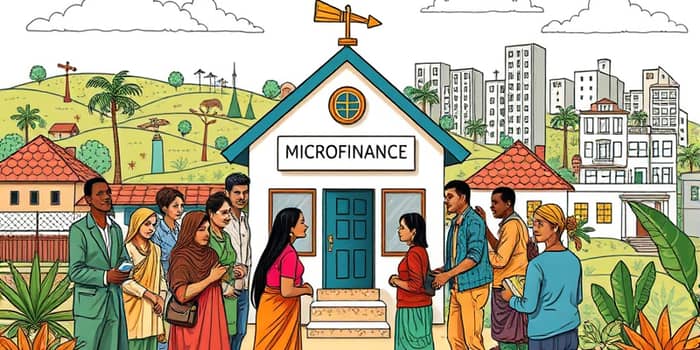
Across the globe, an estimated 1.4 billion people remain excluded from formal banking systems, unable to access even basic financial services. Microfinance offers a transformative gateway, innovative financial solutions to underserved communities, providing hope for those who have been left behind by traditional institutions.
With roots tracing back to the pioneering work of Muhammad Yunus and the Grameen Bank in Bangladesh, microfinance has blossomed into a worldwide movement. Today, more than 10,000 microfinance institutions (MFIs) serve over 70 million borrowers and savers, disbursing a combined loan portfolio exceeding $40 billion.
The Evolution of Microfinance
The concept of microfinance emerged in the 1970s as a radical approach: extending small, collateral-free loans to the unbanked. When Grameen Bank first extended microcredit to landless farmers, it ignited a revolution in poverty alleviation.
Over subsequent decades, the model expanded beyond simple loans. Savings accounts, microinsurance, and financial literacy programs became integral, crafting a holistic suite of services to foster resilience. Pioneers like Muhammad Yunus received global recognition, but today a vast ecosystem of NGOs, cooperatives, and regulated microfinance banks carry forward the mission.
How Microfinance Works
At its core, microfinance relies on rigorous client identification and creative underwriting. Borrowers—often women entrepreneurs and smallholder farmers—are evaluated on their cash-flow projections rather than physical collateral.
Key features of the lending model include:
- Group lending and social collateral, where peer support ensures accountability
- Customized repayment schedules aligned with income cycles, such as weekly market sales or harvest seasons
- Complementary training in budgeting, savings habits, and basic bookkeeping
These features empower borrowers to succeed while mitigating default risks. By fostering self-reliance and confident entrepreneurship, microfinance transforms recipients into agents of change.
Core Services and Innovations
Modern MFIs offer a spectrum of services aimed at comprehensive financial inclusion:
- Microloans for business startup, expansion, agriculture, housing, and emergencies
- Savings Accounts to encourage disciplined deposits and build safety nets
- Microinsurance protecting against illness, disasters, and crop failures
- Financial Education workshops on loan management, profit maximization, and risk mitigation
Technological advances are reshaping delivery: mobile banking apps, digital ID verification, and data analytics for credit scoring cut costs by 10–15%, enabling MFIs to scale sustainably into remote regions.
Measuring Impact with Data
Quantifying success is essential. Recent figures highlight the sector’s scale and growth:
Notably, 80% of first-time microloan recipients are women, unleashing a powerful multiplier effect. In low- and middle-income countries, formal account ownership has reached 75% due to targeted inclusion efforts.
Hierarchy of Benefits
Microfinance ripple effects manifest at multiple levels:
- Individual & Family: Access to credit breaks cycles of poverty, enabling investments in health, education, and nutrition.
- Community & Economy: Small businesses thrive, creating jobs, improving infrastructure, and reducing dependence on informal lenders.
- Macro Development: Sustained poverty alleviation and economic growth fuel national stability and prosperity.
By fostering entrepreneurship in underserved regions, microfinance elevates entire communities and stimulates local markets.
Overcoming Challenges and Criticisms
No social innovation is without hurdles. Critics point to high interest rates—sometimes exceeding 30%—and studies showing limited net-income gains for a subset of borrowers.
Subsidies can reduce client costs but raise questions about long-term sustainability. Operational complexities in remote areas demand creative solutions, from agent networks to partnerships with fintech innovators.
Regulatory frameworks must balance consumer protection with the need for flexible lending. Successful MFIs blend transparency, strong governance, and community involvement to maintain both integrity and impact.
The Future Outlook
Emerging trends promise to amplify microfinance’s reach and efficiency:
- Advanced data analytics and AI for refined credit assessments and personalized product offerings
- Blockchain-based platforms for secure, low-cost transactions and transparent record-keeping
- Digital wallets and API integrations connecting MFIs to global financial systems
Regulatory reforms—such as expedited licensing, reduced capital requirements, and digital identity schemes—are lowering barriers to entry. Regional hubs like India and the United States are scaling best practices, from small finance banks to community development financial institutions (CDFIs).
As we approach 2031, the sector is poised to double its market size, channeling billions into micro-entrepreneurship and resilience. By harnessing policy support, technology, and community leadership, microfinance stands ready to empower the next generation of unbanked populations.
References
- https://www.fincart.com/blog/what-is-microfinance-benefits-and-how-it-works/
- https://www.indeed.com/career-advice/finding-a-job/what-is-microfinance
- https://corporatefinanceinstitute.com/resources/commercial-lending/microfinance/
- https://www.digipay.guru/blog/past-present-and-future-of-microfinance/
- https://www.maximizemarketresearch.com/market-report/microfinance-market/230628/
- https://www.mordorintelligence.com/industry-reports/micro-finance-market
- https://academic.oup.com/oxrep/article/40/1/1/7630840
- https://www.blueorchard.com/microfinance-outlook-for-2025/