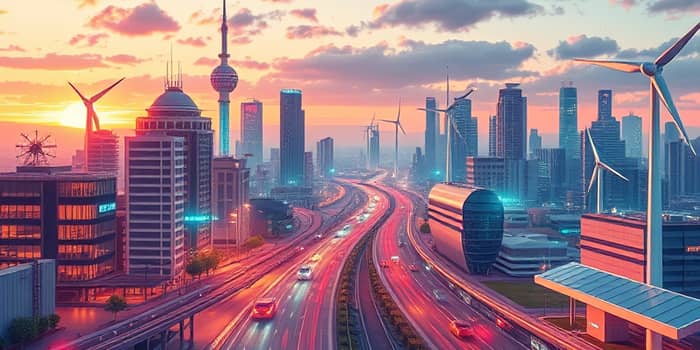
Smart cities represent a bold vision of urban life where digital intelligence and sustainable design converge. By harnessing advanced technologies and innovative funding models, municipalities can transform into thriving, responsive environments that benefit every resident.
The Pillars of Smart Urban Transformation
At the heart of smart city initiatives are technologies that collect and act on real-time data, creating more efficient, resilient, and inclusive urban systems. These foundations foster not only operational excellence but also deeper citizen engagement.
Key components include:
- IoT platforms, sensors, and connectivity for traffic, parking, water, lighting, waste, pollution, and safety monitoring.
- Data-driven governance and analytics using AI and open data exchange to inform policy and community needs.
- Energy-efficient and renewable systems in buildings, transportation, and power grids to minimize ecological footprints.
- Interoperable digital infrastructure enabling municipal operations, cybersecurity, and seamless platform integration.
Sustainable Technology in Action
Smart infrastructure adapts according to four core principles: data collection, analysis, feedback, and adaptability. By closing this loop, cities can optimize resource use automatically, reducing waste and enhancing service delivery.
Types of smart infrastructure span several domains:
- Smart Buildings that adjust lighting, HVAC, and resource use based on occupancy and environmental conditions.
- Smart Mobility solutions leveraging big data and dynamic routing to ease congestion and promote greener travel.
- Smart Energy networks that integrate renewables with sensor-driven distribution optimization.
Financing the Future: Integrated Financial Infrastructure
Achieving this transformation requires robust funding. International Financial Institutions (IFIs) are pivotal, providing approximately $30 billion in annual urban lending, filling gaps left by declining commercial bank funding and offering technical expertise.
Leading IFIs and their focus areas:
These institutions go beyond lending: they champion knowledge-sharing, long-term planning, and multi-stakeholder integration to ensure projects endure and adapt over decades.
Innovative Funding Models for Smart Cities
Traditional budgeting cannot meet the scale or speed of modern urban needs. Innovative financial approaches enable leapfrogging old systems and mobilizing both public and private capital.
- Value capture financing where future increases in land or business value after infrastructure delivery help repay investments.
- Blended instruments and urban development funds combining grants, concessional loans, and structural funds to reduce risk and attract investors.
- Municipal syndication models pooling projects across cities to achieve lower borrowing costs and economies of scale.
- Technical assistance over cancellation rescuing troubled ventures by providing expertise rather than writing off debt.
By building robust business models and new revenue streams, cities can appeal to long-term investors and foster sustainable growth.
Bridging Challenges: Governance, Technology, and Cities
Despite promise, smart city projects face hurdles in both technical and political realms. Ensuring data privacy, cybersecurity, and interoperability demands rigorous standards and ongoing oversight.
Non-technical barriers include securing stable revenue, navigating bureaucratic inertia, and cultivating political will. Cities must empower cross-sector teams with clear leadership and fiscal autonomy to drive complex initiatives.
Collaborative governance frameworks engaging citizens, academia, and private partners foster trust and innovation. By establishing independent infrastructure bodies, municipalities can streamline decision-making and maintain long-term focus.
Lessons from Around the Globe
From North Africa to Southeast Asia, pioneering projects offer valuable blueprints for success.
- Zenata Eco-City, Morocco: A €300 million investment by AFD and EIB creating a sustainable industrial park and port near Casablanca.
- IsDB Water/Sanitation Programs: Over $1 billion to develop integrated systems, moving beyond siloed projects.
- ADB City Cluster Economic Development: Regional integration initiatives linking cities for shared prosperity.
- AFDB Projects in Dakar: Heavy urban investments transforming transport and social infrastructure.
- ASEAN Smart Cities Network (ASCN): A platform matching bankable projects with funding across Southeast Asia.
These experiences highlight the power of bottom-up citizen engagement and sectoral integration in delivering lasting impact.
Charting a Collaborative Path Forward
As urban populations swell, the imperative for smart, sustainable, and resilient cities grows stronger. IFIs continue to adapt, embracing digital tools and risk-sharing mechanisms to support middle-income nations and underserved communities alike.
The rise of disruptive IoT applications and monetizable data streams opens fresh avenues for economic growth, while strong governance ensures equity and security. By keeping citizens at the center and fostering knowledge networks, cities can become laboratories of innovation and well-being.
Ultimately, smart cities stand as a testament to human creativity and collaboration. By blending cutting-edge technology with integrated financial infrastructure, we can unlock new horizons of opportunity, sustainability, and shared prosperity.
References
- https://www.smartcitiesdive.com/ex/sustainablecitiescollective/future-finance-cities-and-urban-infrastructure/1034271/
- https://en.wikipedia.org/wiki/Smart_city
- https://www.deloitte.com/an/en/Industries/government-public/perspectives/smart-cities-funding-and-financing-strategies.html
- https://forcetechnology.com/en/articles/smart-cities-communities-infrastructure-whitepaper
- https://biblus.accasoftware.com/en/smart-infrastructure/
- https://www.infrastructureinvestor.com/thinking-smart-the-rise-of-the-smart-city/