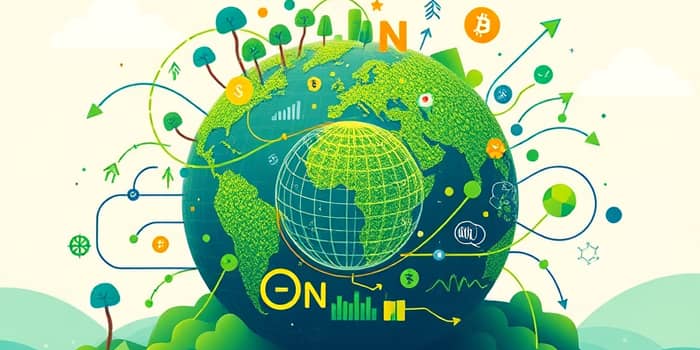
In an era of urgent environmental challenges, the financial sector stands at a crossroads. Traditional models focused solely on returns are giving way to new paradigms that value both economic success and ecological resilience. Profitability and environmental stewardship are no longer opposing goals but intertwined objectives for forward-thinking enterprises.
This article explores how sustainable fintech innovations are reshaping finance, offering practical solutions and inspiring a global shift toward a healthier planet.
The Emergence of Sustainable FinTech
Also known as Green FinTech, sustainable fintech describes technology that helps provide sustainable solutions in payments, carbon monitoring, risk assessment, and reporting. By embedding environmental considerations into every transaction, these ventures minimize negative impacts on ecosystems and communities.
At its core, sustainable fintech operates on the belief that financial services can drive positive environmental outcomes without sacrificing returns. This shift positions sustainability as a competitive advantage rather than a marketing slogan.
Core Technologies Driving the Revolution
Several cutting-edge technologies underpin the sustainable fintech movement, enhancing transparency, efficiency, and accountability across financial activities.
- Carbon tracking technology enabling real-time monitoring of CO₂ emissions and behavior-driven suggestions
- AI-driven ESG compliance tools automating reporting, risk detection, and resource optimization
- Machine learning fraud prevention reducing wasteful expenditures and enhancing security
- Blockchain-powered transparency for immutable climate-related transactions and supply chain data
By leveraging blockchain, artificial intelligence, and machine learning, sustainable fintech platforms are far more than digital wallets—they are engines for lasting environmental transformation.
Pioneering Solutions and Real-World Impact
Innovators around the world are deploying sustainable fintech solutions that tackle carbon emissions, democratize green investing, and redefine banking models.
Transaction-based carbon tracking apps like Doconomy and ecolytiq measure users’ environmental footprints based on spending habits. They provide personalized tips and offsetting options, giving both consumers and businesses real-time sustainability insights at scale.
Green investment platforms are lowering barriers to funding renewable projects. Trine allows investors to finance solar installations with as little as 25 euros, while Raise Green connects accredited and non-accredited investors to local eco-projects, tracking expected environmental benefits.
Peer-to-peer energy markets are also gaining traction. Platforms like Vandebron in the Netherlands and Piclo in the UK enable households to trade surplus renewable energy directly, fostering community-driven microgrids and reducing reliance on fossil fuels.
Climate-friendly banking models, exemplified by Atmos, channel customer deposits exclusively into sustainable infrastructure: renewable energy, electric transport, green buildings, and regenerative agriculture. This approach ensures that every deposit has a minimal negative environmental impact while generating competitive returns.
Navigating Challenges and Charting Future Paths
Despite remarkable progress, the sustainable fintech sector must overcome significant hurdles to scale effectively.
- Lack of comprehensive climate data and standardized reporting methods
- Energy-intensive technologies sometimes paradoxically increase carbon footprints
- Integration challenges with legacy financial systems and multiple data vendors
- Absence of uniform metrics for lifecycle carbon accounting
Tackling these issues requires cross-industry collaboration, robust regulatory frameworks, and investment in next-generation data infrastructure. Regulators in Europe and beyond are mandating ESG disclosures, elevating sustainability from voluntary practice to legal requirement.
Emerging trends point to deeper integration of climate-risk modeling in core financial products, increased consumer demand for green banking, and the rise of digital wallets that eliminate paper and plastic waste. Venture capital firms are recognizing the high growth potential across sectors, with climate-focused fintech startups raising record funding even in challenging markets.
Looking ahead, sustainable fintech will continue to evolve around three pillars: accurate impact measurement, seamless regulatory compliance, and user-centric design that empowers individuals to participate in climate action.
A Call to Action
Companies, investors, and consumers each have roles to play. Financial institutions must embrace transparency and innovation, deploy capital responsibly, and partner with technology providers to build solutions that deliver both profits and planetary benefits.
For entrepreneurs and developers, the opportunity lies in creating platforms that blend financial acumen with environmental science, offering intuitive experiences that reward sustainable choices.
Consumers can drive change by choosing banking and investment products aligned with their values, demanding clear impact reporting, and supporting businesses that prioritize the health of our planet.
Measurable impact on climate change mitigation is no longer an abstract concept—it’s the defining metric of success for the next generation of fintech. By aligning profit with purpose, we can collectively build a financial system that safeguards both economic prosperity and Earth’s future.
The journey toward sustainable finance is underway. Join the movement, harness the power of innovation, and help shape a world where growth and environmental resilience go hand in hand.
References
- https://geniusee.com/single-blog/sustainable-fintech-companies
- https://www.fennech.com/post/the-esg-fintech-investment-boom-where-venture-capital-is-flowing
- https://www.oxfordcorp.com/insights/blog/the-rise-of-sustainable-finance-green-fintech-solutions/
- https://wezom.com/blog/fintech-development-trends-2026
- https://internationalbanker.com/finance/fintech-for-good-a-burgeoning-movement-for-the-sustainable-finance-age/
- https://www.unepfi.org/themes/ecosystems/action-on-nature-what-can-financial-institutions-expect-in-2026/
- https://www.juniperresearch.com/resources/blog/green-fintech-365-inside-the-sustainable-future/
- https://www.retailbankerinternational.com/comment/the-shape-of-finance-in-2026-how-ai-esg-and-global-risk-are-redefining-banking-and-investment-strategy/
- https://businesscasestudies.co.uk/what-is-sustainable-fintech/
- https://fintechmagazine.com/articles/top-10-sustainable-fintech-trends
- https://www.taylorwessing.com/en/insights-and-events/insights/2026/01/fintech-outlook-2026
- https://fbf.eui.eu/the-rise-of-green-fintech-exploring-a-new-trend/
- https://www.iisd.org/articles/insight/using-financial-technologies-more-sustainable-planet