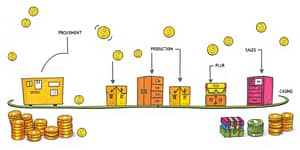
In today’s competitive landscape, understanding the total cost a company incurs to raise funds is not merely an academic exercise—it is a strategic imperative. Companies that grasp their cost of capital gain a powerful benchmark for investment decisions, enabling them to allocate resources where they will deliver value. Borrowers, in particular, can harness this metric to optimize financing, reduce risk, and align every project with the overarching goal of sustainable growth.
Whether you represent a nimble startup seeking seed financing or an established enterprise planning multi–million‐dollar projects, the cost of capital serves as your financial compass. By comparing the required returns of debt and equity with potential project yields, you avoid value destruction and chart a course toward long‐term profitability.
Understanding the Foundations of Cost of Capital
The cost of capital represents the opportunity cost of deploying funds into any investment. It is composed of two primary components:
- Cost of debt: the after‐tax interest expense on loans and bonds.
- Cost of equity: the expected return demanded by shareholders.
- Weighted Average Cost of Capital (WACC): a blended rate across all capital sources.
Viewed through the borrower’s lens, this blended rate sets the hurdle for new ventures. Only projects offering returns above WACC will create net value. Below this threshold, shareholders’ wealth erodes, and financing costs outpace earnings.
Calculating Your Weighted Average Cost of Capital
To quantify WACC with precision, follow these core steps:
- Calculate after‐tax cost of debt (kd): interest rate × (1 – tax rate).
- Estimate cost of equity (ke) via CAPM: ke = Rf + β × (Rm – Rf).
- Determine capital structure weights: D/V for debt, E/V for equity.
- Compute WACC: (E/V × Re) + (D/V × Rd × (1 – T)).
Within the CAPM framework, the risk‐free rate (Rf) often reflects government bond yields. Beta measures systematic risk, while the equity risk premium (Rm – Rf) captures the extra return investors require. Alternative methods, such as the dividend capitalization model or build‐up approach, can complement CAPM for firms lacking reliable beta estimates.
Practical Applications for Borrowers
By integrating your calculated WACC into financial planning, you unlock several strategic advantages:
- Benchmark for informed investment decisions in capital budgeting.
- Guidance on the optimal debt‐to‐equity mix to minimize financing costs.
- Foundation for merger and acquisition valuations using discounted cash flows.
- Tool for assessing financing alternatives under varying market conditions.
When debt is cheaper due to the tax shield, increasing leverage can lower WACC—up to a point. However, excessive borrowing raises default risk and drives up the cost of equity. Striking the right balance is essential to safeguarding credit ratings and maintaining flexibility for future investments.
Case Study: Bringing Theory to Life
Consider "GreenWave Technologies," a midsize renewable‐energy firm evaluating a new solar farm. The company’s CFO determined a WACC of 9.5 percent, reflecting 40 percent debt at 5 percent interest (after tax) and 60 percent equity at an 11 percent return requirement. GreenWave’s project feasibility study forecasted an internal rate of return of 12 percent over 20 years. On paper, the project cleared the WACC hurdle—but the CFO dug deeper.
She adjusted cash‐flow projections for potential regulatory changes, construction delays, and maintenance overruns. By applying a sensitivity analysis, she discovered that a six-month delay would erode returns to 9.3 percent—just below WACC. Armed with this insight, GreenWave negotiated stronger contractor guarantees and secured a fixed‐rate equipment lease, reducing construction risk. With those measures in place, the project’s expected return rebounded to 12.5 percent, well above the hurdle rate. The investment proceeded, delivering consistent dividends and strengthening the company’s market reputation.
This narrative illustrates how cost of capital drives deeper risk assessment, shaping both quantitative analysis and qualitative negotiations. Without a clear WACC benchmark, GreenWave might have accepted a marginal deal or overlooked critical safeguards.
Key Considerations and Common Pitfalls
When applying these concepts, keep an eye on factors that can distort your WACC estimate:
Common pitfalls include using book values instead of market values, neglecting the dynamic market conditions over time, and overlooking size or industry risk premiums. For private firms, building a bespoke discount rate often requires peer‐group analysis and adjustments for company‐specific risk factors.
Conclusion: Embracing Cost of Capital in Strategic Growth
Mastering the cost of capital empowers borrowers to make informed, confident decisions. It illuminates the threshold that projects must exceed to enhance returns, and it guides the optimal balance between debt and equity. By embedding WACC into every stage of planning—from feasibility studies to board presentations—you transform a technical metric into a catalyst for sustainable success.
Commit to regularly revisiting your assumptions, communicating transparently with stakeholders, and adapting to evolving market landscapes. In doing so, you will not only meet stakeholder expectations but also preserve and enhance shareholder value for years to come.
References
- https://swoopfunding.com/ie/business-glossary/cost-of-capital/
- https://www.wallstreetprep.com/knowledge/cost-of-capital/
- https://www.becker.com/accounting-terms/cost-capital
- https://www.uschamber.com/co/run/business-financing/calculating-cost-of-equity
- https://en.wikipedia.org/wiki/Cost_of_capital
- https://learning.treasurers.org/resources/how-to-calculate-the-cost-of-capital
- https://online.hbs.edu/blog/post/cost-of-capital
- https://corporatefinanceinstitute.com/resources/valuation/what-is-wacc-formula/
- https://www.financialprofessionals.org/training-resources/resources/articles/Details/cost-of-capital-inside-and-out
- https://legal-resources.uslegalforms.com/c/cost-of-capital-method
- https://www.sofi.com/learn/content/cost-of-capital/
- https://www.youtube.com/watch?v=wJ8cIDUxoWs
- https://gocardless.com/en-us/guides/posts/cost-of-capital-definition-formula-and-examples/
- https://www.youtube.com/watch?v=BOGYGEPdfTs