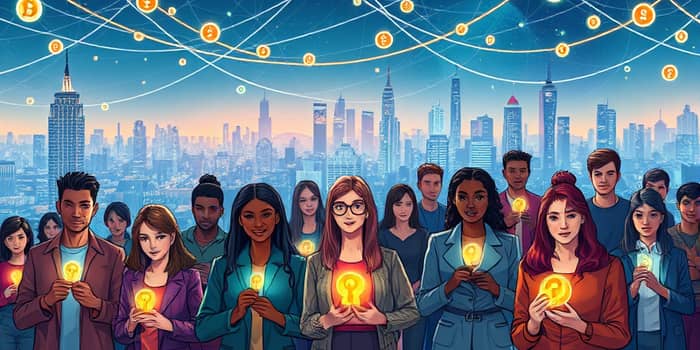
Blockchain is transforming how we think about property, identity, and value. By replacing intermediaries with code, it empowers individuals to truly own and manage their assets.
Understanding Blockchain Asset Ownership
At its core, blockchain asset ownership records claims on a a decentralized, immutable digital ledger that spans thousands of computers worldwide. This network operates without a single point of control, using consensus algorithms like proof-of-work or proof-of-stake to validate transactions.
Every transaction is cryptographically linked to the previous one, forming a permanent chain of records. Once a block is finalized, it cannot be altered or deleted, offering unparalleled proof of ownership and security against tampering and fraud.
The Power of Tokenization
Tokenization turns real-world items—like art, real estate, or company shares—into digital tokens on a blockchain. These tokens serve as programmable representations of physical assets that can be divided, traded, and managed via smart contracts.
To tokenize an asset, one must:
- Define its properties (value, ownership rules, metadata)
- Encode these details into a smart contract on a public blockchain
- Issue tokens that grant holders specified rights or fractional claims
Applications of tokenization include:
- Real-world assets (RWAs): Fractional ownership of property, art, and commodities
- DeFi platforms: Peer-to-peer exchanges and lending without intermediaries
- DAOs: Community-led organizations governed by token-based voting
- Stablecoins: Crypto assets pegged to fiat currencies for price stability
Adoption Trends and Real-World Impact
Global adoption of blockchain assets surged from 2018 to 2023 at a 99% CAGR, far outpacing traditional payment growth. As of 2024, over 560 million people—nearly 7% of the world’s population—own cryptoassets.
Demographically, 58–65% of crypto holders are under 34, with Gen Z leading in adoption. Male investors represent 61% of the market, though female participation is rising steadily. High-income earners and diverse communities show strong engagement, reflecting blockchain’s inclusive potential.
The current market valuation of digital assets peaks above $4 trillion, with Bitcoin and Ethereum driving most activity. DeFi now accounts for over 60% of on-chain financial services, highlighting the shift from traditional banking.
Benefits Redefining Ownership
- Transparency and Security: Instant verification of transactions, safeguarded by private keys and cold storage
- Liquidity: Global, peer-to-peer trading around the clock, even for high-value assets
- Cost Efficiency: Elimination of intermediaries reduces fees and settlement times
- Inclusivity: Low barriers to entry allow fractional investment in previously inaccessible markets
- User Sovereignty: Full control over data and holdings, in contrast to centralized platforms
These benefits are already reshaping industries—from real estate to art—enabling small investors to access diversified portfolios and fostering a more equitable financial ecosystem.
Navigating Risks and Challenges
Despite its promise, blockchain ownership brings responsibilities. Losing private keys can mean permanent loss of assets. New users may find decentralized exchanges and wallet management daunting without clear guidance.
- Key Management: Secure backup and hardware wallets are essential
- Regulatory Landscape: Evolving rules require ongoing compliance checks
- Technical Complexity: User interfaces must improve to broaden adoption
- Demographic Gaps: Targeted education can help underrepresented groups participate
Understanding these hurdles is critical. By adopting best practices—such as using multi-signature wallets, following compliance updates, and engaging in community forums—users can mitigate risks and build confidence.
Embracing the Future of Decentralized Assets
The next wave of innovation will blend tokenized real-world assets with advanced smart contracts, enabling automated governance, dividend distribution, and programmable settlement. These developments promise a seamless, borderless financial system.
To get started:
- Choose a trusted wallet and secure your private keys using hardware devices
- Experiment with small amounts on user-friendly DeFi platforms
- Join a DAO to experience community-led governance firsthand
- Research regulatory updates to ensure compliant asset management
By following these steps, you can harness programmable smart contracts and self-custody practices to take control of your financial future. The decentralized revolution is not just a technological shift—it’s a movement toward greater autonomy, transparency, and global inclusion.
As blockchain asset ownership goes mainstream, every individual has the opportunity to redefine their relationship with wealth and identity. Embrace this paradigm shift today, and become part of a future where ownership is truly in your hands.
References
- https://www.tohme-accounting.com/post/blockchain-asset-ownership/
- https://www.triple-a.io/cryptocurrency-ownership-data
- https://chain.link/article/tokenized-ownership
- https://scoop.market.us/blockchain-statistics/
- https://www.ovhcloud.com/en/learn/what-is-decentralized-blockchain/
- https://nftplazas.com/crypto-adoption-statistics/
- https://scholarspace.manoa.hawaii.edu/server/api/core/bitstreams/da7d3ba9-379e-48a8-98e8-18b2bc293b1f/content
- https://www.morganstanley.com/insights/articles/digital-assets-push-into-the-mainstream-as-global-adoption-surges
- https://www.dcentralab.com/blog/defining-web3-a-deep-dive-into-decentralization-user-owned-assets
- https://initiatives.weforum.org/blockchain/insights
- https://www.chainalysis.com/blog/asset-tokenization-explained/
- https://www.deloitte.com/us/en/what-we-do/capabilities/blockchain-digital-assets/services/blockchain-digital-assets-definition.html
- https://unstoppabledomains.com/blog/categories/onchain-domains/article/everything-you-need-to-know-about-digital-asset-ownership
- https://www.pwc.com/us/en/tech-effect/emerging-tech/understanding-cryptocurrency-digital-assets.html
- https://www.jpmorgan.com/payments/newsroom/blockchain-101-glossary-terms