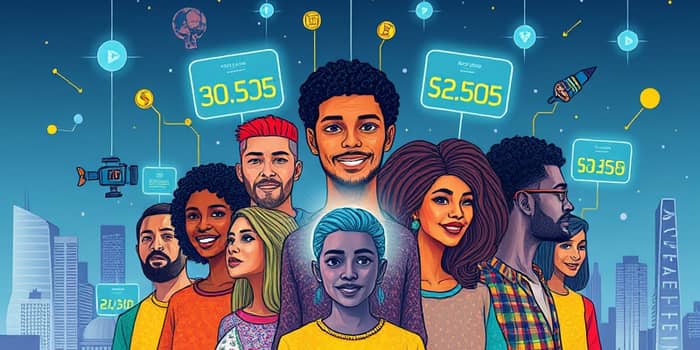
In a rapidly evolving financial landscape, credit is no longer the static, opaque product it once was. Innovations in artificial intelligence, machine learning, and alternative data are reshaping the credit industry landscape to make borrowing faster, fairer, and more inclusive.
Whether you’re a credit union exploring new underwriting tools, a fintech startup seeking to serve thin-file borrowers, or a bank adapting to private credit competition, understanding these trends is essential. The journey toward algorithmic, inclusive lending can transform communities, drive growth, and align profitability with purpose.
Algorithmic Innovations Driving Credit Decisions
At the heart of this transformation lie AI-powered decision engines and agentic AI that automate underwriting. These systems analyze vast, unstructured data sets in real time, producing credit approvals in minutes instead of days. By combining algorithmic speed with human oversight, lenders can achieve balancing speed, accuracy, and fairness across diverse portfolios.
Advanced machine learning techniques—deep learning, neural networks, and predictive analytics—outperform traditional models like FICO or VantageScore. They detect subtle patterns in transaction histories, industry trends, and cash-flow metrics to forecast borrower behavior with unprecedented precision.
- Real-time assessments powered by knowledge graphs
- Integration of external financial statements and bureau data
- Automated bias detection and mitigation protocols
- Continuous model retraining with live economic indicators
These predictive analytics and knowledge graphs reduce subjectivity, minimize human error, and strengthen risk management. With AI‐driven, programmable finance, institutions can respond rapidly to margin and regulatory pressures while maintaining consistency.
Expanding Access Through Alternative Data
Traditional credit scoring leaves millions underserved. Thin-file and no-file borrowers—often low-income, minority, or new to credit—face barriers that alternative data can overcome. By leveraging utility payments, rental histories, mobile phone records, and social signals, lenders can evaluate creditworthiness beyond conventional metrics.
Inclusive underwriting strategies now rely on using alternative data for approvals to reduce statistical discrimination based on protected characteristics. This approach helps expand lending to those historically excluded, supporting financial stability and community development.
- Utility and rent payment histories
- Mobile phone and digital wallet activity
- Social and community engagement metrics
- Employment and education records
Credit unions, in particular, have a unique opportunity to combine algorithmic tools with member relationships. By offering personalized advisory services alongside fast, data-driven underwriting, they uphold cooperative values and addressing fairness gaps in assessments.
The Rise of Private Credit and New Lending Models
As banks de-risk and regulatory landscapes shift, private credit has surged into the mainstream. A $41 trillion addressable market now offers alternatives to traditional bank loans, with private funds poised to replace up to 15% of lending. Specialty finance, embedded finance, and B2B BNPL are challenging legacy channels.
Between 2020 and 2030, private credit strategies have diversified geographically and by sector. Europe’s market has expanded significantly, while U.S. direct lenders and specialty finance firms raised $79 billion and $37 billion respectively in 2025. Asset-based financing and PIK structures now account for a growing share of business development company (BDC) income.
These shifts demonstrate how private credit can complement traditional banking. By partnering with fintechs, leveraging agentic AI, and tapping retail investors, both banks and non‐bank lenders can diversify portfolios and meet evolving borrower needs.
Mitigating Risks and Ensuring Fairness
Algorithmic tools promise efficiency but carry risks. Hidden biases in training data can perpetuate unfair outcomes. Borrowers may face predatory targeting or opaque pricing if safeguards are not in place. Institutions must adopt rigorous validation techniques, including auditing unlabeled datasets and stress-testing models against demographic disparities.
Regulators are increasingly focused on AI governance, bias detection, and consumer protection. Compliance teams should integrate explainability frameworks and maintain transparent documentation of model decisions. A proactive approach to deep underwriting and risk management will foster trust and avoid potential enforcement actions.
Finally, lenders should cultivate multidisciplinary teams—data scientists, ethicists, compliance officers, and community advocates—to oversee algorithmic systems. By combining technical expertise with human judgment, organizations can deliver sustainable growth while upholding fairness and ethical standards.
Charting a Collaborative Path Forward
The future of credit hinges on collaboration. Credit unions, banks, fintechs, private funds, and regulators all have a role to play in building a more inclusive, efficient ecosystem. By sharing best practices, contributing to open model repositories, and engaging stakeholders, the industry can harness AI’s full potential.
Practical steps for institutions include:
- Implementing bias monitoring tools with regular audits
- Incorporating diverse alternative data sources responsibly
- Investing in workforce training on AI ethics and governance
- Engaging community partners to inform algorithm design
Together, these efforts can transform credit access, empowering individuals and businesses while maintaining robust risk controls.
Conclusion: Embracing a New Era of Credit
As we move further into 2026 and beyond, the convergence of AI‐driven algorithms, inclusive data, and private credit innovation will define the next generation of lending. Institutions that embrace these technologies responsibly will unlock new markets, foster financial inclusion, and achieve sustainable growth.
The journey toward inclusive, algorithmic credit for all is both a technological and moral imperative. By balancing innovation with fairness, lenders can ensure that the benefits of modern finance reach every corner of society, building prosperity one credit decision at a time.
References
- https://us.eascorp.org/trust-tech-and-member-value-credit-union-trends-for-2026/
- https://blogs.law.ox.ac.uk/business-law-blog/blog/2018/11/law-and-autonomous-systems-series-algorithmic-credit-scoring-and
- https://www.withintelligence.com/insights/private-credit-outlook-2026/
- https://finfloh.com/blog/credit-scoring-engine
- https://www.weforum.org/stories/2026/02/banking-enters-the-agentic-era-and-other-finance-news-to-know/
- https://www.aiologic.io/automated-credit-scoring/
- https://risk.lexisnexis.com/insights-resources/infographic/credit-trends
- https://www.mastechdigital.com/blogs/ai-in-credit-scoring
- https://www.wellington.com/en-us/institutional/insights/private-credit-outlook
- https://realworlddatascience.net/applied-insights/case-studies/posts/2026/02/11/algorithmic_bias_credit_scoring.html
- https://www.blackrock.com/institutions/en-us/insights/thought-leadership/credit-outlook
- https://www.cgap.org/blog/algorithm-bias-in-credit-scoring-whats-inside-black-box
- https://iqeq.com/insights/private-credit-in-the-u-s-market-outlook-and-strategic-trends-for-2026/
- https://www.accessiblelaw.untdallas.edu/post/when-algorithms-judge-your-credit-understanding-ai-bias-in-lending-decisions
- https://www.equifax.com/business/blog/-/insight/article/february-2026-consumer-pulse-the-latest-consumer-credit-trends/