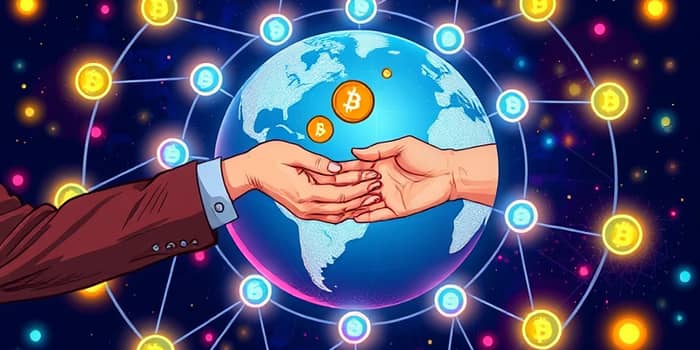
Imagine a world where money moves as effortlessly as messages do today. The Internet of Money brings that vision to life, letting individuals exchange value anywhere on Earth, anytime, without intermediaries.
The Birth of a Digital Revolution
In late 2008, amid global financial turmoil, a pseudonymous innovator named Satoshi Nakamoto published a white paper describing Bitcoin. This protocol promised peer-to-peer value exchange without banks, inspired by a desire to free money from centralized control.
By January 2009, the network launched its first block, establishing an immutable public ledger of transactions. This breakthrough transformed the way digital assets could be tracked, secured by cryptography and collective consensus.
Key Pillars of the Internet of Money
Underpinning this movement are several technical pillars that make the Internet of Money possible. Each element ensures security, transparency, and broad accessibility.
- Decentralized public ledger (blockchain)
- Cryptographic security and hashing
- Consensus mechanisms (e.g., Proof-of-Work)
- Programmable smart contracts and tokens
Together, these pillars form a decentralized digital network where value moves with the speed of the internet, unlocking unprecedented possibilities.
Unlocking Real-World Applications
The power of the Internet of Money extends far beyond simple payments. It reshapes industries, from finance to real estate, and empowers creators globally.
- Cross-border remittances with minimal fees
- Tokenized property shares and real estate
- Decentralized finance (DeFi) lending and borrowing
- Non-fungible tokens (NFTs) for art and digital collectibles
- Supply chain tracking with transparent provenance
These applications demonstrate how borderless and permissionless access can foster inclusion, innovation, and efficiency in every sector.
Empowering Individuals and Communities
Millions lack access to traditional banking. The Internet of Money offers an alternative: simple wallet software on any smartphone or basic computer. Anyone can hold assets, send and receive value, and participate in global markets.
Communities organize around shared protocols, creating local investment funds, peer-to-peer lending circles, and microtransaction networks. Through cooperative governance models, members shape their financial future together.
Practical Steps to Participate
Diving into the Internet of Money may feel daunting at first. These clear steps will guide you toward confident engagement and lasting impact.
- Research core concepts: blockchain, wallets, and tokens
- Choose a reputable digital wallet for self-custody
- Purchase a small amount of cryptocurrency to learn
- Implement security best practices (backup seeds, two-factor authentication)
- Experiment with programmable smart contracts on test networks
- Join community forums, meetups, or developer groups
By starting small and learning consistently, you build expertise and resilience. Over time, you can explore advanced tools, contribute to open-source projects, or even launch your own tokenized initiative.
Looking Ahead: A World Transformed
As adoption grows, the Internet of Money will reshape global commerce, dismantle unfair gatekeepers, and democratize access to capital. Imagine teachers in remote villages receiving micro-grants instantly, or artists earning royalties through automated contracts worldwide.
We stand at the cusp of a global digital revolution in finance. By embracing this evolution, each of us can become both steward and beneficiary of a more equitable, efficient, and transparent economic system.
Now is the time to explore, learn, and participate. The Internet of Money invites you to be part of a movement that redefines value itself—where every transaction connects us, empowers us, and propels us toward a shared, prosperous future.
References
- https://www.circle.com/blog/intro-to-crypto-and-the-internet-of-value
- https://www.schwab.com/learn/story/cryptocurrencies-what-are-they
- https://mitsloan.mit.edu/ideas-made-to-matter/blockchain-explained
- https://usa.kaspersky.com/resource-center/definitions/what-is-cryptocurrency
- https://www.youtube.com/watch?v=8RjHAcSMbhQ
- https://www.bc.edu/bc-web/bcnews/nation-world-society/business-and-management/q-a-on-cryptocurrency-.html
- https://www.coursera.org/articles/how-does-cryptocurrency-work
- https://guides.loc.gov/fintech/21st-century/cryptocurrency-blockchain