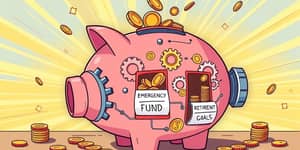
Financial freedom is the holy grail of personal finance—a state where you have sufficient income, savings, investments, and reliable passive income streams to cover both your needs and your aspirations.
Unlike mere financial security, which ensures basic necessities, or financial independence, which makes work optional, true freedom allows you to embrace your dream lifestyle without constant stress. In this roadmap, we will guide you through practical steps to define, pursue, and maintain your ideal financial future.
Building a Solid Foundation
The first step on this journey is a clear-eyed assessment of your current financial situation. Start by calculating your net worth—inventory all assets such as cash, investments, real estate, and deduct any debts.
Simultaneously, track and categorize your monthly expenses—housing, transportation, groceries, entertainment—using simple spreadsheets or apps. Monitoring your credit score and ensuring there are no reporting errors will set a strong base for growth.
Finally, articulate your personal vision: What does financial freedom look like for you? How much passive income must you generate to live comfortably? These answers will guide every subsequent decision.
Setting SMART Goals
Goals without clarity often falter. Adopt the SMART framework—Specific, Measurable, Achievable, Relevant, Time-bound to craft each milestone. Break large objectives into monthly benchmarks, making progress tangible and motivating.
Segment your aspirations into short-term (under one year), mid-term (one to five years), and long-term (beyond five years). A short-term goal might be building a $5,000 emergency fund in 12 months by saving approximately $417 each month. Mid-term targets could include a home down payment, while long-term dreams may involve mortgage payoff or creating a retirement nest egg.
Mastering Your Budget and Expenses
An effective budget is the backbone of financial freedom. Many experts recommend the 50/30/20 rule: allocate 50% of income to necessities, 30% to discretionary spending, and 20% to savings and debt repayment.
- 50% Necessities: housing, utilities, groceries.
- 30% Discretionary: dining out, entertainment, hobbies.
- 20% Financial Goals: emergency fund, investments, debt.
Enhancing your budget requires discipline: practice frugality by eliminating unnecessary costs, avoid lifestyle inflation when your income rises, and automate transfers to savings and investment accounts each pay period.
Crushing Your Debt
Debt is often the biggest barrier to financial freedom. Prioritize high-interest balances such as credit cards and payday loans. Two popular strategies are the debt avalanche—attacking the highest interest rate first—and the debt snowball—targeting the smallest balance to build momentum.
List every debt with its balance, minimum payment, and interest rate. Then funnel any extra cash—be it tax refunds, work bonuses, or side income—to accelerate payoff. Once debts are eliminated, redirect those funds toward your savings and investments.
Supercharging Your Savings
Building an emergency fund and cultivating a saving habit are essential. Aim to save three to six months’ worth of living expenses in a separate account. Automate consistent contributions to both this fund and to tax-advantaged retirement accounts.
A disciplined approach turns saving from a choice into a habit. By treating your savings goals as mandatory bills, you remove the temptation to spend that money elsewhere, bringing you ever closer to your financial freedom.
Expanding Income Streams
Relying solely on a single paycheck limits your options. Boost your primary income through skill development, promotions, or career transitions. Simultaneously, cultivate alternative revenue sources—freelance work, consulting, or an online side business.
True resilience and speed toward freedom come from multiple streams of passive income. Consider rental properties, dividend-paying stocks, peer-to-peer lending, or creative royalties. Diversification not only accelerates wealth accumulation but also buffers against market volatility.
Investing for Growth
Investing is the core engine of wealth building. Start as early as possible and contribute regularly. Diversify across asset classes—stocks, bonds, real estate, and global markets—to spread risk and smooth returns.
Focus on income-generating assets suited to your risk tolerance. Reinvest dividends and interest to harness the power of compound growth over time. Leverage tax-advantaged vehicles such as 401(k)s or IRAs, and consider consulting a professional advisor to tailor strategies to your unique situation.
Continuous Education and Maintenance
The financial world evolves constantly. Commit to ongoing education—read books, attend workshops, leverage reputable online content—and update your plan with every life change: marriage, children, career shifts, or market cycles.
Regularly review your portfolio and budget, adjusting allocations and targets. Cultivate a mindset of humility; market downturns and unexpected expenses are part of the journey. Staying informed and adaptable ensures you retain control over your financial destiny.
Embracing the Journey
Financial freedom is not a final destination but an ongoing journey. Celebrate each milestone, no matter how small, and savor the growing sense of empowerment. Maintain balance—recognize that money is a tool to enable your passions, relationships, and contributions to the world.
By following this structured roadmap—assessing your situation, setting SMART goals, budgeting wisely, eliminating debt, saving consistently, expanding income, investing prudently, and learning continuously—you position yourself to live life on your own terms. Embrace the process with determination and optimism, and you will unlock the profound freedom that comes from financial mastery.
References
- https://www.moneyfit.org/financial-freedom-means/
- https://libertygroupllc.com/blog/financial-independence-vs-financial-freedom-whats-the-difference/
- https://nativeteams.com/blog/financial-freedom
- https://www.pnc.com/insights/personal-finance/spend/achieve-financial-freedom.html
- https://www.canberra.edu.au/uc-alumni-canvas/canvas-articles/posts/5-steps-to-financial-freedom
- https://www.boh.com/blog/achieving-financial-freedom-what-how-and-why
- https://www.tcdrs.org/library/7-strategies-for-financial-independence/
- https://www.amerisbank.com/Personal/Learn/Financial-Articles-Advice/Managing-Your-Money/What-Is-Financial-Freedom
- https://www.sccu.com/articles/personal-finance/guide-to-achieving-financial-freedom